What Happens After Stump Grinding? What to Do Next
A stump can look like a small problem until it sits right where you need to mow, park, build a fence, or let the kids run. Folks often ask us what happens after stump grinding because they want to know whether the stump is truly gone and what their yard will look like when we pull out.
The short answer is this. The visible stump is ground below grade, but the roots stay in the ground and slowly break down over time. You will also have wood chips, a shallow hole to fill, and an area that needs a little attention before it looks like the rest of the lawn.
What Happens After Stump Grinding?
Our stump grinder cuts the stump into small wood chips, usually several inches below the surrounding ground. That gets rid of the hard stump, lowers the tripping hazard, and gives you a usable spot again. It is a good option when a stump is in a lawn, flower bed, driveway edge, or future building area.
Grinding does not mean we dig out every root. Root removal can disturb a much larger section of yard and may not be needed. Once the stump is ground, the major roots underground begin to decay naturally. For most homeowners, that is the right balance between getting the stump out of the way and avoiding unnecessary damage to the property.
The size, age, and species of the tree make a difference. A big old water oak can leave a broad root system. A loblolly pine may have roots that decay differently and can leave some settling later on. That is normal. The ground was supporting wood underground, and as that wood breaks down, soil can settle into those spaces.
You Will Have Mulch and a Hole to Manage
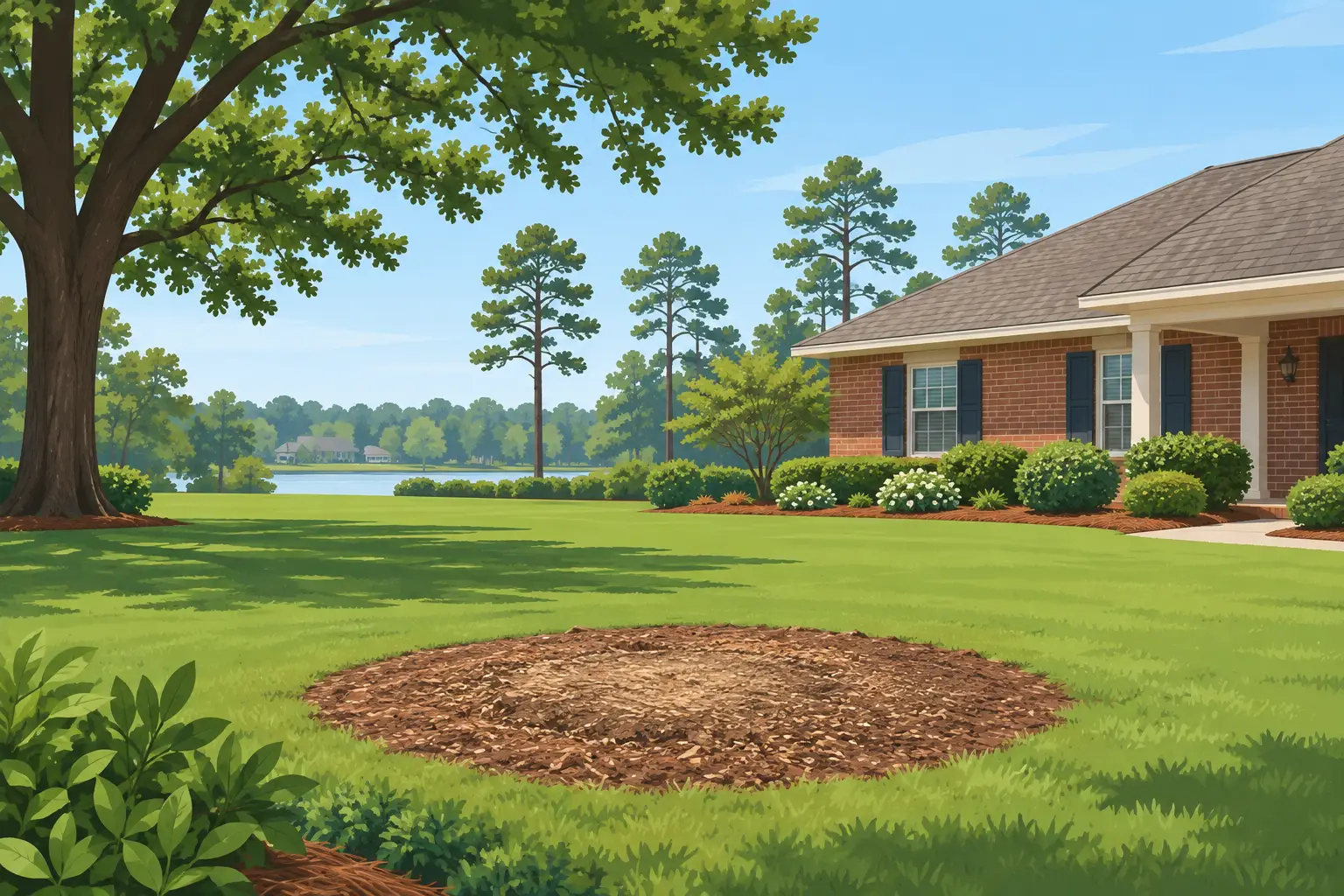
Stump grinding creates a mix of wood chips, dirt, and small pieces of root. Some customers want us to leave that material because it can be useful around shrubs or natural areas. Others want it hauled away so they can start fresh with topsoil and grass. We talk through that during the estimate so you know what to expect.
Here is what I tell customers. Do not use a thick pile of fresh stump grindings as fill and expect grass to grow right through it. The wood chips hold moisture, shift as they break down, and use nitrogen while they decompose. Grass seed or sod needs soil contact and a reasonably level surface.
If you are restoring the lawn, the usual plan is to remove or spread out most of the grindings, add clean topsoil, and lightly pack it to match the grade around it. Leave it just a little high if possible. Central Mississippi rain can settle fresh soil quickly, especially after a spring storm.
For a flower bed, some chips can be useful as mulch, but keep them away from the base of plants. Mulch piled against a trunk or shrub can hold too much moisture against the bark. A thin layer spread out evenly works better than a deep mound.
The Roots Will Not Keep Growing
After a tree is removed, the roots are no longer being fed by the leaves. They do not keep spreading through the yard or hunting for pipes. They begin a slow breakdown process.
Some species can send up sprouts from living roots or from the remaining stump tissue if the stump was not fully dealt with. This is more common with some hardwoods than with pine. If you see small shoots come up near the old tree location, cut them back while they are small. Letting them grow can keep stored energy moving through part of the root system.
Roots near sidewalks, driveways, and underground lines deserve some common sense. Grinding the stump does not suddenly make existing roots move or cause new damage. But if you are planning to install a driveway, build a slab, or put in a fence near the old tree, tell us before the work begins. The site may need additional clearing or grading depending on what you are building.
Expect a Little Soil Settling
Settling is one of the most common things homeowners notice months after a stump is ground. The spot may look level at first, then dip after rain and after underground roots start to rot. That does not mean the stump grinding was done wrong.
Check the area now and then during the first year. If it starts to sink, add a little more topsoil and level it out. This matters most where water could collect near a house, walkway, or driveway. You want rain moving away from the foundation, not pooling in an old stump location.
If the stump was near a fence or a structure, settling can be more noticeable because there is less room to blend the grade. That is one reason we walk the job with the customer before we leave. A good result is not just getting the stump low. It is making sure everybody understands what the area will need next.
When Can You Plant Grass or Replant a Tree?
You can usually seed, sod, or cover the area once the chips are managed and good soil is in place. The best choice depends on the season, the amount of shade, and how much foot traffic the spot gets. In a busy backyard, sod may give you a quicker finished look. In a larger open yard, seed can make sense if conditions are right.
Planting another tree in the exact same place is different. Fresh grindings, old roots, and settling soil make that location less than ideal for a new tree. Move the new tree several feet away when you can. That gives its roots better soil and keeps it from competing with the old root system as it decays.
Choose the new tree with the location in mind. A water oak can become a large tree, and a fast-growing tree can create another close-to-the-house problem years down the road. Think about roof clearance, power lines, drainage, and where limbs will be when the tree matures. Around Entergy lines, it is especially wise to plan ahead rather than plant trouble under the wires.
Will a Ground Stump Attract Termites?
A ground stump is not a termite invitation to your house. Termites are already part of the environment here, and they feed on dead wood in the soil. Removing the above-ground stump and excess chips actually takes away a large, easy food source near the surface.
Still, do not pile old stump grindings against your home or leave decaying wood stacked beside the foundation. Keep mulch and soil below siding level, and pay attention to moisture around the house. If you are already concerned about termite activity, speak with a qualified pest professional. Stump grinding is one part of yard cleanup, not a substitute for pest treatment.
A Clean Finish Makes the Difference
Stump grinding is often the last part of a tree removal job, but it can also be the first step toward a better yard. Maybe you are tired of mowing around a stump. Maybe you need room for a shed, fence, patio, or a cleaner lot before selling. The work should fit the plan you have for the property.
We use equipment that fits the job and take care around lawns, gates, and nearby landscaping. Where ground conditions call for it, we use ground protection mats to help keep ruts out of the yard. Before we leave, we walk the work with you. If something is not right, tell us that day or the next, and we will make it right.
A little topsoil and attention after grinding can turn an old problem spot into useful ground again. That is usually all it takes to put the stump behind you.
Ready to get that old stump out of the way and your yard growing again?
Call or text (769) 328-7050 for a free estimate.
Southern Removal is family owned in Flowood, and Joey Milner is a Licensed Mississippi Tree Surgeon (TSL #50044).